ESOP Strategy for Growing Companies
Employee Stock Ownership Plans (ESOPs) are increasingly being adopted by growing companies as a critical tool for attracting, retaining, and motivating employees. Unlike traditional cash-based incentives, ESOPs allow employees to acquire ownership in the company, creating a direct link between employee performance and the company’s long-term value. For companies in growth phases, particularly startups and mid-sized enterprises, ESOP plan strategy under IFRS provide a strategic advantage by fostering loyalty, promoting accountability, and aligning employee goals with corporate objectives.
ESOPs are not only a tool for motivation but also an instrument for efficient capital management. By granting equity-based rewards instead of higher cash compensation, growing companies can preserve cash for operational expansion, research and development, and strategic investments. However, implementing an ESOP effectively requires careful planning, IFRS 2-compliant accounting, and robust operational administration to ensure both regulatory compliance and strategic value.
Additionally, ESOPs send a strong signal to the market and potential investors that the company is committed to sustainable growth, employee empowerment, and strong governance practices. For growing companies, this signaling effect can enhance credibility and facilitate access to financing, partnerships, and talent acquisition.

Designing an ESOP for Growth Companies
Determining the Size of the ESOP Pool
One of the first considerations is determining the appropriate size of the ESOP pool. Companies must strike a balance between incentivizing employees and preserving equity for founders and existing shareholders. Typically, growing companies allocate between 5% to 15% of total equity to the ESOP pool, depending on the stage of growth, number of employees, and strategic goals. This process is often supported by business valuation services for ESOP in Singapore to ensure fairness and strategic alignment.
It is essential to assess the long-term impact of equity dilution on ownership structure, voting rights, and founder control. Scenario modeling can help companies evaluate different ESOP pool sizes, considering potential fundraising rounds, future hires, and retention strategies. Clear communication about the purpose and structure of the ESOP pool is essential to manage employee expectations and ensure buy-in.
Setting Exercise Prices
Exercise price decisions are a critical component of ESOP strategy. The exercise price is usually set at or above fair market value at the grant date. Setting the price too low may dilute founder ownership excessively, while setting it too high can reduce the motivational impact of the plan.
Companies should also consider future rounds of financing and anticipated valuation growth to ensure that employees perceive value in their stock options. Documenting the rationale for the exercise price, including supporting valuations, helps ensure transparency and compliance with IFRS 2, particularly when dealing with external audits or investor scrutiny.
Vesting Schedules and Performance Metrics
Vesting schedules help retain talent and incentivize performance. Time-based vesting rewards employees for long-term commitment, while performance-based vesting ties rewards to business objectives such as revenue growth, profitability, product development milestones, or market share expansion.
A combination of both approaches allows companies to balance retention and performance-driven rewards. For example, a four-year time-based vesting schedule with annual cliffs ensures employees remain committed, while tying 30-50% of equity to measurable performance outcomes motivates employees to achieve company goals. Proper documentation of vesting schedules and clear communication to employees are critical to prevent misunderstandings and disputes.
Eligibility Criteria
Determining who is eligible for the ESOP ensures fairness and strategic alignment. Typically, key employees, executives, and high-impact contributors are prioritized. Eligibility should be determined based on factors such as role, seniority, contribution to strategic goals, or critical skill sets.
Clearly defined eligibility criteria prevent disputes, ensure fairness, and guarantee that key talent is appropriately incentivized. Additionally, aligning ESOP eligibility with company strategy ensures that equity incentives reinforce the behaviors and results that are most valuable for growth.
Accounting and Compliance Considerations
Grant Date Fair Value and IFRS Compliance
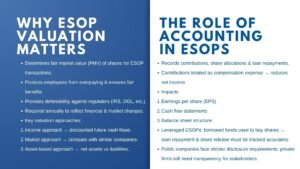
Under IFRS 2, companies must measure the fair value of ESOPs at the grant date. For growing companies, this can be challenging due to limited market data, valuation uncertainty, and stock volatility.
Valuation models such as Black-Scholes or binomial approaches incorporate expected volatility, risk-free interest rates, expected option life, dividend yield, and performance conditions. Startups and growth companies often require expert input from financial advisors or valuation specialists to ensure compliance. Close collaboration between finance, legal, and HR teams ensures that all relevant assumptions are accurately captured and documented for audit purposes.
Recognizing Expenses Over the Vesting Period
ESOP-related expenses must be recognized systematically over the vesting period to reflect the true economic cost of equity compensation. Adjustments are required for forfeitures, cancellations, or modifications to avoid misstatement of expenses or liabilities.
Transparent and detailed documentation of the expense recognition process not only satisfies IFRS 2 compliance but also enhances investor confidence by showing disciplined financial management. Tracking tools or accounting software can automate the calculation of expenses, ensuring accuracy and reducing the administrative burden on finance teams.
Handling Modifications and Cancellations
Changes to stock option terms, such as modifying exercise prices, extending vesting periods, or early cancellations, require updated fair value assessment.
Growing companies must implement internal policies to handle modifications consistently, including clear approvals and documentation. Proper accounting ensures that financial statements accurately reflect liabilities, equity, and expense recognition, while safeguarding investor trust.
Operational Implementation and Administration
Tracking Grants and Exercises
Efficient ESOP administration requires robust tracking of grants, exercises, forfeitures, and cancellations. Centralized equity management platforms or cloud-based solutions are particularly beneficial for growing companies managing multiple equity transactions across geographies. Real-time tracking ensures accurate accounting, supports transparency, and improves audit readiness.
Cross-Functional Collaboration
Implementing and administering an ESOP requires seamless collaboration among finance, HR, and legal teams. Finance ensures proper valuation and accounting, HR manages communication and employee records, and legal ensures regulatory compliance. Collaboration reduces the risk of errors, accelerates decision-making, and maintains compliance with local regulations and IFRS standards.
Employee Communication and Education
Clear communication and training are essential to ensure employees understand their stock options. Employees need to know about vesting schedules, exercise rights, potential liquidity events, and the impact on taxes. Educated employees are more engaged, perceive equity as valuable, and remain motivated to contribute to long-term growth.
Tax Planning and Compliance
ESOP taxation can vary by jurisdiction. Companies must educate employees on taxable events at grant, vesting, exercise, and sale. Mismanagement can result in unexpected tax liabilities, employee dissatisfaction, or compliance penalties. Integrating ESOP management with payroll and tax systems ensures accurate withholding, reporting, and audit readiness.
Scenario planning is another effective tool, allowing companies to simulate tax outcomes under various exit or market conditions. This ensures proactive management and helps guide employee decisions while avoiding surprises.
Strategic Benefits of ESOPs in Growing Companies
Talent Retention and Motivation
A well-designed ESOP strengthens loyalty and employee retention by offering a meaningful stake in the company’s future. Employees motivated by potential equity gains are more likely to align their efforts with company growth initiatives, innovate, and remain committed to achieving business objectives.
Aligning Employee Performance with Corporate Goals
Performance-based vesting ensures that equity rewards are linked to measurable business outcomes, including revenue targets, market expansion, or operational efficiency. This alignment motivates employees to focus on actions that directly impact growth and long-term company success.
Enhancing Investor Confidence and Governance
IFRS 2-compliant ESOP accounting and reporting demonstrate financial discipline, governance, and transparency. Clear documentation of grants, valuations, and vesting schedules provides investors with confidence, facilitates fundraising, and strengthens credibility in mergers or acquisitions.
Industry-Specific Considerations
Growing companies in high-growth sectors such as technology, fintech, or biotechnology face unique challenges due to volatility, frequent milestone-based vesting, and rapid scaling. Regular reassessment of valuations, vesting assumptions, and performance metrics is essential for accurate reporting and employee motivation.
Regulated industries such as banking, healthcare, and financial services must ensure ESOP administration aligns with strict regulatory requirements, including governance and deferred compensation rules. Proper accounting ensures compliance, audit readiness, and investor trust.
Case Study ESOP Example
A mid-sized technology company with 150 employees planned to implement a 12% ESOP pool targeting key talent and senior leadership. The company set the exercise price at fair market value at grant, designed a four-year vesting schedule with annual cliffs, and allocated 50% of options to performance milestones such as product launch success and revenue growth targets.
Finance, HR, and legal teams collaborated to document fair value assumptions, establish internal procedures for modifications and cancellations, and communicate the program’s mechanics and tax implications to employees. A centralized cloud-based equity management platform tracked all grants, exercises, and forfeitures in real-time. This approach ensured IFRS compliance, strengthened employee engagement, enhanced retention, and increased investor confidence during the company’s subsequent funding round.
Conclusion to ESOP Strategy for Growing Companies
Implementing an ESOP in a growing company requires careful strategic planning, precise accounting, Share-based payments strategy guide operational efficiency, and comprehensive employee education. Well-designed ESOPs align employee incentives with long-term company performance, strengthen loyalty, and support talent retention. IFRS 2-compliant valuation and reporting, combined with transparent documentation and technology-driven administration, ensure regulatory compliance and build investor trust.
By structuring grants thoughtfully, linking vesting to meaningful performance metrics, educating employees on valuation and tax implications, and integrating robust internal processes, companies can leverage ESOPs as a strategic tool for growth. Ultimately, an effectively implemented ESOP transforms equity-based incentives into a sustainable mechanism for employee motivation, corporate governance, and long-term value creation, enabling growing companies to compete successfully in highly dynamic markets.