Why Companies Are Increasingly Offering ESOPs and ESOS
Introduction to Why Companies Are Increasingly Offering ESOPs and ESOS
Nowadays, in competitive business world, organizations continuously consider the way they attract, retain and motivate their best talents. The conventional compensation packages of salary, bonuses, and benefits are no longer adequate in the development of loyalty and alignment of the employees with long-standing strategic objectives. Instead, firms are resorting to equity-based rewards like Employee Stock Ownership Plan (ESOPs) and Employee Stock Option Scheme (ESOS), a shift that has also increased the demand for ESOP valuation Singapore expert services to ensure fair and transparent implementation.
These programs have been mainstreamed across Singapore and other world business centres in compensation. They give the employees a chance to experience a share in the financial prosperity of the company, and at the same time enables the employers to save on cash and develop an ownership-based culture. However, what is the catalyst of this adoption boom and why are startups and existing companies adopting ESOPs and ESOS in 2025?
The Movement towards the Culture of Ownership.
Employees to Stakeholders.
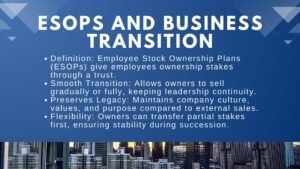
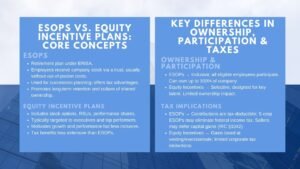
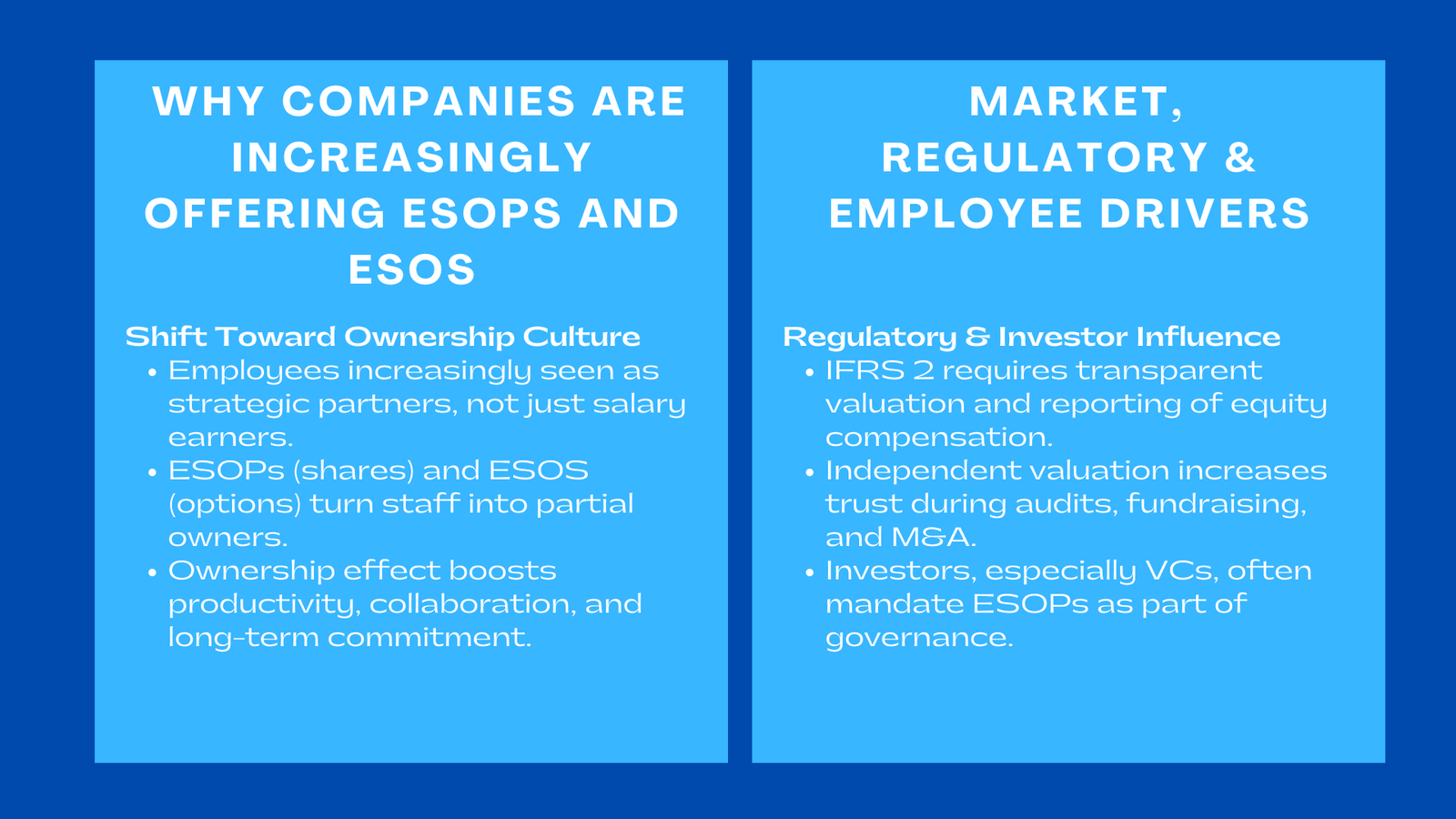
The corporate culture has changed such that employees are regarded not as salary earners but rather discussed as business collaborators. This transformation is achieved by forcing employees to be partial owners either directly by (immediately) allocating shares (in the case of ESOPs) or conditional owners by stock options (in the case of ESOS).
This sense of ownership essentially transforms the behavior at the workplace. The employees are more motivated to work in the best interest of the company when they realise that their performance can contribute directly to the share value of the company (and hence to their own personal financial benefit). What follows are increased productivity, enhanced cooperation and a greater sense of responsibility at all organizational levels.
The Psychological Competitiveness.
The behavioral economists tend to emphasize the concept of ownership effect which points towards the fact that people are more interested in the outcome when they have certain interest in it. This is the principle that ESOPs and ESOS capitalize on as personal achievement is tied to the business performance.
The engagement and turnover reported in companies that have implemented the employee ownership programs in Singapore are always high. Employees are interested in the long-term results and not the short-term salaries, which matches their promotional goals to the company development.
Monetary and Operational Inspirations to Employers.
Managing Talent in a Competitive Market.
Competition in the market of talents has increased in Singapore, especially in areas with rapid development, such as fintech, biotechnology, and professional services. The demand of skilled professionals is huge, and the use of conventional retention methods is not sufficient anymore.
ESOPs and ESOS have now emerged as useful retention tools. Companies can make part of the compensation dependent on future ownership or appreciation of the capital to motivate workers to stay with the organization until their options or shares are vested. This has not only minimized turnover expenses but it also promotes continuity in leadership and institutional knowledge.
Saving Money and Delivering Value.
In case of startups and in growth-stage businesses, liquidity tends to constrain their competitive capacity in terms of salary. The solution to this is the use of equity-based compensation. Through this approach, companies are able to compensate employees by providing them with stock ownership; that is, ownership of stocks rather than cash and retain cash to expand, research or develop certain technologies.
This structure can lead to improved flexibility of cash flow and keep employees satisfied even with big organizations. This will be a win-win situation, as employees will get meaningful long-term rewards, and the employers will run their monetary resources in a strategic manner.
Linking Performance to Growth of the company.
ESOPs and ESOS establish strong linkage in individual and corporate performance. Both the employees and the shareholders gain when share prices are high or the valuation of the companies is high. This synergy leads to the creation of a culture of continuously improving as employees are encouraged to be innovative, efficient and contribute to profitability directly.
The programs also form part of the larger performance frameworks used by companies, where the option grants or share allocation is tied to particular measures such as increase in revenue, to return on equity, or sustainability goals.
Regulatory, Accounting, and Market Influences
The Rise of Transparent Valuation Standards
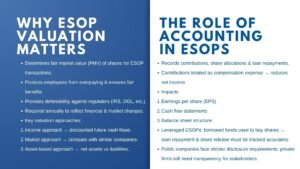
Regulatory developments in Singapore have made equity compensation more transparent and accountable. Companies must now assess and report the fair value of ESOP and ESOS grants in Singapore under IFRS 2 share-based payment standards.
Although this requirement has augmented administrative responsibility, it has also made these programs justified in the eyes of investors and regulators. Independent valuation is also fair and accurate and it safeguards both the organization and employees.
Consequently, organizations with strong valuation and reporting processes are credible especially in the process of fundraising, audit, or in mergers and acquisitions. The transparency trend has contributed to the establishment of ESOPs and ESOS as standard, compliant as well as credible compensation plans.
The Changing Expectations of Investors.
Shareholders are moving towards firms that rely on equity-based reward systems to retain the best talent and to align employee interests with the shareholder interests. Prior to the funding programs, venture capital firms, especially, often promote or mandate portfolio companies to adopt ESOP or ESOS programs.
Such programs are an indication of good governance and long term thinking, both of which are appealing qualities to institutional investors and prospective acquirers. Maturity in human capital management can also be achieved by an established ESOP or ESOS in case of a private company planning to go to the IPO.
Empowerment and Employee Benefits.
Creating a Personal Wealth and Financial Security.
To the employees, equity participation changes the association of employees with work. They regard compensation as an investment, rather than a transaction (monthly). As the company is prosperous so are they.
The possibility of wealth creation is of particular importance in the vibrant startup ecosystem of Singapore. Employees who are hired in young companies and are granted equity when valuation is low may make a significant fortune in case the company expands or in the event there is an IPO. ESOPs and ESOSs offer the prospect of long-term wealth development that goes beyond salary in its variety of established, stable companies.
Developing Loyalty and Professional Development.
There are also increased loyalty and engagement when employees are enrolled into ownership programs. They are more likely to put up with difficulties, considering the success of the company as their success. Such psychological ownership leads to teamwork, entrepreneurship and creativity – aspects which enhance competitiveness of the company.
Moreover, ESOP or ESOS allows employees to become financially literate. The knowledge of vesting, valuation, and taxation would expand their knowledge in corporate finance and investment principles – a good kind of professional development.
Implementation Problems and Good Practices.
Designing Effective Plans
Although the advantages are evident, ESOPs and ESOS implementation should be planned. Firms should set clear eligibility requirements, vesting programmes and exercise terms so that they are fair and transparent. There is legal compliance, accounting compliance as well as tax compliance that has to be done in detail.
Engaging a reputable ESOP and ESOS valuation service in Singapore helps ensure that all share-based transactions are properly assessed and documented. Established models such as the Black-Scholes or Monte Carlo simulations are applied by professional advisors to calculate fair value to make sure that they can be accurate and justify it during an audit or financial review.
Communication and Education.
The plan no matter how well it is designed may fail as long as the employees do not get it. Open communication is essential. The staff members are expected to understand how the program functions, vesting schedule, and financial performance that they may achieve. Education and reporting clarity creates trust and wring to the fullest motivational effect in companies.
The platforms of digital equity are also changing the methods of delivery of these programs. They enable tracking of vested shares, option status and potential gains in real time, making the management of the vested shares, options and potential gains simple both to the HR and finance departments.
ESOPs and ESOS Future in 2025.
With this in mind, the tendency toward employee ownership should gain momentum in the future. As Singapore continues to consolidate its standing as an innovation-led economy, firms within the different industries will keep using equity based incentives as a policy.
It is also the way these plans are structured based on emerging ESG frameworks. Even more alignment between financial and ethical objectives can be formed by the connection of equity rewards with the sustainability or governance performance.
Finally, ESOPs and ESOS are never just the compensation plans, but they are the philosophy. This is achieved through empowering the employees to own the company, thus establishing strong cultures of mutual success.
Conclusion
The emergence of ESOPs and ESOS is an indication of a complete change of mindset by companies regarding compensation, motivation, and corporate governance. To employers, these programs provide strategic resources to win talent, save money and match performance to expansion. To employees, they symbolize empowerment, monetary chance as well as an investment in the destiny of the company.
With transparency, regulation, and technology still in the process of developing, ESOPS and ESOS will still be at the center of the contemporary employment environment. The level of flexibility and accountability that has been demonstrated through the progressive perspective of Singapore means that these ownership structures will still have a say in the future of work in the coming years.