How Can ESOP Valuation Benefit Employees and Employers?
ESOP is more than just a retirement tool — it’s a legal framework that creates a link between a company’s success and employee financial results. ESOP Valuation can benefit employees and employers because it sets the price at which company shares are purchased and sold and credited to employee accounts each year; that price must reflect the current and actual value of the company and not some number from the past or something that makes a company owner’s life easier. Valuing the business defensibly helps defend against regulatory probes, lawsuits, and shareholder disagreements. For employees, it directly affects the amount of dollars that will be accumulating in their retirement account over time, many of whom may not fully understand how the number was generated on their statement. Professionalswhot are early and mid-career with a familiarity of the principles of fair ESOP valuation — as well as how it translates into ESOP Value for the Employee — will be better equipped to explain, administer ,or review these plans, whether in a finance, HR, or advisory capacity. This article walks you through the process, provides real examples and explains the benefits of disciplined ESOP Value Creation for all stakeholders involved, including the newest employee and the company’s founders.
What Is an ESOP and How Does ESOP Valuation Benefit Employees and Employers?
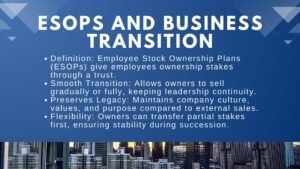
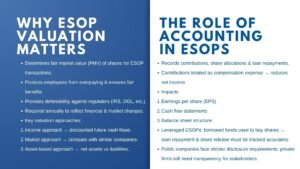
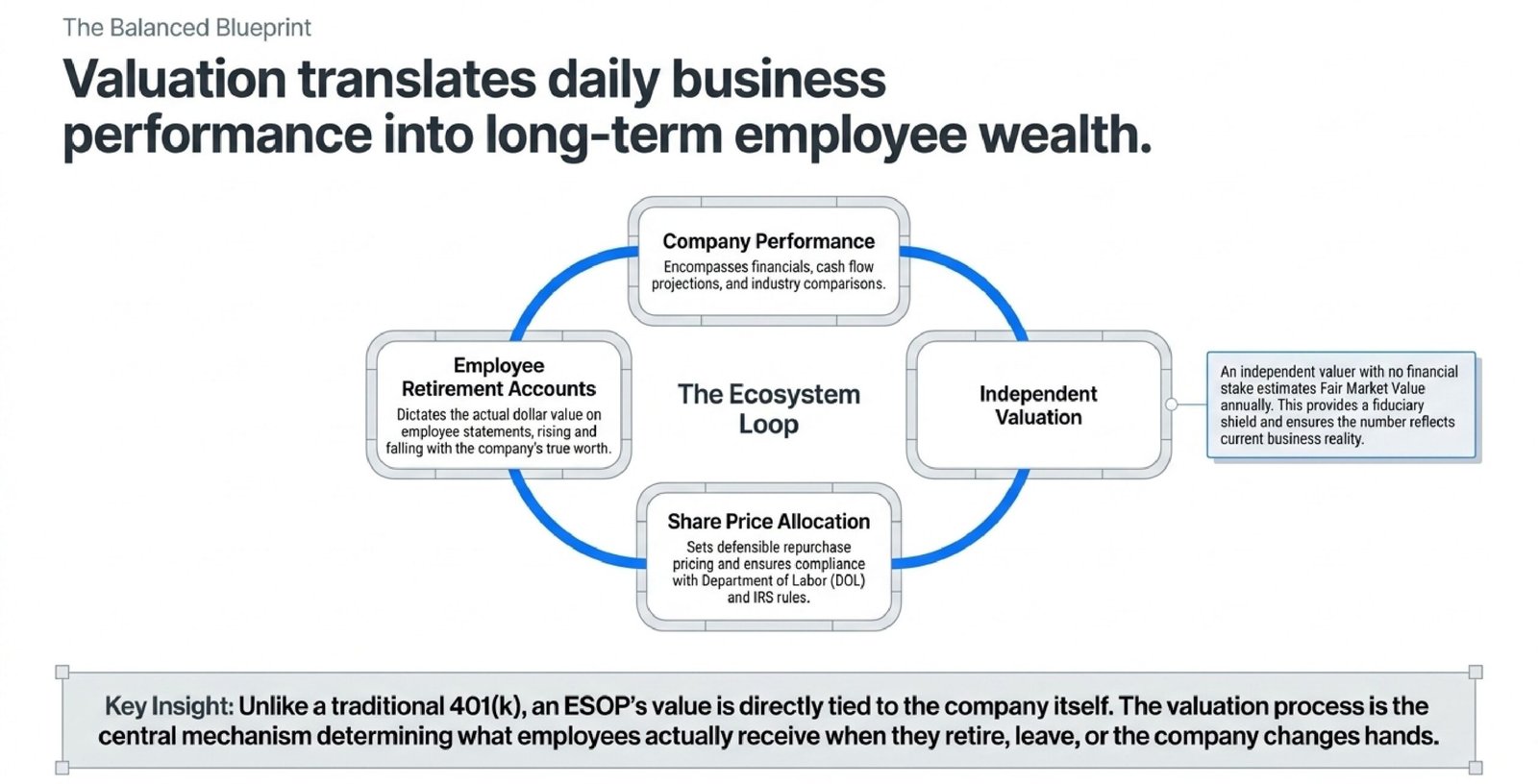
An Employee Stock Ownership Plan is a retirement program where a company holds shares of the business (typically held in trust) for the benefit of the employees to gain their ownership of the business as they progressively acquire more tenure with the company. The valuation process is not a background formality like a traditional pension or 401(k), but rather the key process that determines what’s inside an employee’s account when they retire, leave the company, or its assets are sold. Since most ESOP companies are privately owned, they have no public stock price to be based o;, an independent valuation firm must determine the fair market value of the shares at least once per year and provide its valuation based on financial statements, industry comparisons, and cash flow projections. It’s this annual discipline that is so tangible and so regular for both employees and employers, rather than a one-off event linked to one specific transaction. It also provides a clear understanding of why the value produced by a qualified, independent valuer is so important: wrong numbers or shortcuts here will impact every aspect of plan reporting, repurchase pricing and employee statement.
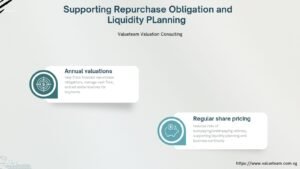
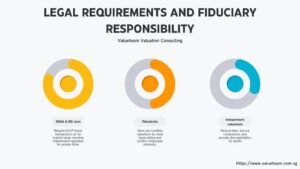
The employer side of the equation is just as important as the employee side of the equation. Company executives use the valuation to determine the repurchase price if they sell out when a key person leaves, and to prove they meet the Department of Labor and Internal Revenue Service guidelines for ESOPs in the United States. If valuation is too high, the company may be required to repurchase shares that it cannot afford, and if its valuation is too low, it could be viewed as unfair or even spark a regulatory investigation that threatens the goal of the plan, which was to provide a valuation benefit to both employees and the company. That’s why Fair ESOP Valuation is not a footnote task; it is a crucial fiduciary duty — and that is why trustees are required by law to make sure that they are doing right by the plan participants when they are looking at the number an outside valuation firm spits out. In reality, trustees have the right and often do challenge a valuation report, ask for more information, or even ask for a second opinion before agreeing to a valuation number that will impact employee accounts.
How Does Fair ESOP Valuation Protect Employees and Companies in Practice?
The importance of the discipline becomes more evident when it is applied to real-life examples, and two of the most recognizable examples in the United States differ in several respects: one from a mid-sized manufacturer and the other from a household brand selling in a retail environment. Springfield ReManufacturing Corporation, a Missouri-based engine remanufacturing company, acquired through a leveraged buyout in the 1980s, became an employee-owned corporation, and its management later developed a whole management philosophy – dubbed “open-book management” – to teach employees to understand the financials of the company and the impact of their daily work on share value. The company provided scorecards each week to allow all employees, no matter their position, to view the trends for the key numbers and the number’s final outcome in the company’s valuation for retirement plans. Employees reported that they were very engaged and continued to grow for decades following the company’s operational decisions because they were able to see how those decisions affected the number in their own retirement account. The case is often referenced in business literature as a good example of ESOP Value Creation in action and is presented as a metric that is understood and shared – one that is carried out on a daily basis and which aligns with employee wealth at the end of the year. Staff with the ability to observe, in simple terms, the impact of a shorter manufacturing cycle or lower proportion of scrap materialweres much more inclined to seek such improvements for the business than to wait for an instruction on which direction to go.
One of the biggest employee-owned businesses in the United States, Publix Super Markets has a different lesson to offer about consistency and scale. Publix is not public, uses an internal valuation process conducted under the guidance of external advisors to determine the per-share value for stock purchases and distributions made by employees. The company’s history of profitability and steady financial reporting over many decades has allowed the company’s stock price to rise fairly slowly, resulting in good accounts balances for long-term employees when they retire. Often, newer employees who join the company are surprised at how directly, at this scale, the ESOP benefits employees and employers, because even a small yearly increase in the share price adds up nicely over several decades of employment. The example shows that the valuation itself is not the source of ESOP Value for Employee;, it is the value the business delivers through its performance that is the source. This difference is very significant for anyone advising a company on how to think about its plan. The value of a business can only be reported, it cannot be created by a valuation report.
What Are the Key Steps Behind ESOP Value Creation?
It typically takes a single set of practices, many of which do not require a big finance team in-house, to transform an ESOP from a paper exercise into a true avenue for driving ESOP Value Creation. ESOP advisors, trustees, and plan administrators generally suggest the following five steps:
- Have an independent qualified valuation firm prepare the number – If the number is prepared by someone who is not financially invested in the outcome, it will be less susceptible to regulatory and participant scrutiny and defend itself in the event of an audit or lawsuit.
- Revalue on a fixed schedule – If necessary, revalue the share price on a fixed schedule, at least once a year, after a large debt repayment or a major event like an acquisition, so that the Fair ESOP Valuation does not become too far out of line with the current business reality.
- Make it clear that the number is valued – Make it clear to employees why the number is valuable so that the ESOP Value for Employees is tangible.
- Relate the valuation to actual performance – Link the numbers used in valuation to performance metrics that employees can actually impact on day-to-day.
- Record all assumptions for the trustee to consider – Be sure to document methodology and data sources to support Fair ESOP Valuation in the event of an IRS or DOL valuation.
These steps combine to make the valuation process more of an operating management tool than an annual compliance chore. Organizations with this mindset will have better levels of employee engagement as the individual can see a clear connection between what they do and the money they get to enjoy after retirement, the very spirit of ESOP Value Creation at its best. If a HR or finance person is junior and can explain at least two or three of these five practices to a new employee, then they have a better understanding of Fair ESOP Valuation than many of their peers who have only seen the plan once at the time of the enrollment.
What Benefits and Challenges Come With ESOP Value for Employees?
A well-managed ESOP is beneficial to both parties. When a company is doing well, employees receive an asset that they share in the growth of the company, and research on employee-owned companies has consistently shown higher retention and increased engagement with the company than those that are traditionally owned — which many researchers believe is directly because they see ESOP Value Creation over time. Employers are able to have a highly motivated workforce and, in some cases, significant tax advantages associated with the plan in the particular structure. If you’re an HR, finance or benefits consultant looking to get into the field, knowledge of how ESOP valuation benefits employees and Employers is a very marketable HR skill, as demand for ESOP administration expertise has steadily increased as more privately held companies implement the ESOP as a succession planning tool. That expansion has created new entry and middle level opportunities in the areas of plan administration, valuation coordination, and employee communication in particular.
The problems are actual, and can be spoken about. Valuation is an annual expense that costs money, and for smaller companies it is sometimes underestimated, that the costs of supporting a defensible, independent valuation process that can withstand external enquiry continue to cost money. Companies must take cash flow requirements into account when planning for the eventuality of a large cohort of long-serving staff members retiring in a single year, otherwise, it can become a cash flow drain. There is also a communication issue; employees who don’t understand the valuation may not trust the number, particularly in a year when the number drops as a result of normal market or business conditions rather than mismanagement. This type of misconception can slowly erode the ESOP Value for Employees that the plan is intended to create, even if the business is doing well. By identifying these limitations early, a company can plan appropriately for resources and communications needed and not view the annual valuation as a behind-the-scenes project that only emerges when a problem occurs. Table 1 below outlines the relationship between various elements of the valuation process and the creation of value with an ESOP through the typical life cycle of an ESOP plan, from the time that shares are first allocated through until an employee ultimately retires.
Table 1: ESOP Valuation Practices and Their Role in ESOP Value Creation – How Can ESOP Valuation Benefit Employees and Employers?
| Valuation Practice | Purpose | Contribution to ESOP Value Creation |
|---|---|---|
| Annual independent appraisal | Sets the official share price | Keeps employee accounts tied to real business performance |
| Trustee review and sign-off | Confirms fiduciary compliance | Protects both employees and company leadership |
| Employee financial education | Builds understanding of the number | Increases engagement and trust in the plan |
What Lessons Do Real ESOP Cases Teach About Fair ESOP Valuation?
The materials science company of W.L. Gore & Associates, maker of Gore-Tex, has been a majority employee owned business for decades and has a unique flat management structure with few titles. The ideas it teaches extend past the details of any particular valuation report, and also into a company culture that values ownership: When the employees know that they have a stake in the company, they will be more likely to ask questions about how the number is computed based on a well-informed perspective. This is a dynamic that helps support Fair ESOP Valuation as much as it is something that is imposed on it by outside regulation. The bigger lesson for professionals is that good valuation is not only a technical matter, it is aalso n indication that the company places a high value on transparency with the people whose retirement security hinges on the outcome, and that’s true across all aspects of the company’s financial operations.
For early-career professionals, it’s about the knowledge of ESOP is a differentiated skill in the financial and HR sectors—it’s something that is relatively uncommon in newly graduated students’ expertise, even in the age of increasing employee ownership frequency in mid-sized and large private businesses. When a candidate can explain how ESOP is useful for the employee as well as the employer in a real working company—not just in theory—they’ll be more valuable to roles that involve compensation and benefits administration or corporate finance and will have a talking point when talking to skeptical colleagues or leadership about ESOP value for employees. The reading of an ESOP valuation report, understanding the forecasting of repurchase obligations, and the ability to communicate the process to non-financial employees are all skills that are applicable across industry. Case studies such as those included above will enable professionals to make meaningful contributions to the Value for Employees dimension of ESOP development before they become senior leaders or have attained a formal qualification in valuation. Finally, employers can rely on employees who are able to answer employee questions about the plan with confidence, minimizing confusion and fostering trust in the final year’s report. .
Table 2: Common ESOP Valuation Challenges and Fair ESOP Valuation Strategies – How Can ESOP Valuation Benefit Employees and Employers?
| Challenge | Recommended Strategy |
|---|---|
| Rising repurchase obligations | Forecast retirements and fund a sinking account in advance |
| Employee distrust of the share price | Provide regular, plain-language financial education |
| Inconsistent annual data | Standardize reporting formats before each valuation cycle |
| Valuer conflicts of interest | Rotate or independently vet the appraisal firm periodically |
Conclusion : How Can ESOP Valuation Benefit Employees and Employers?
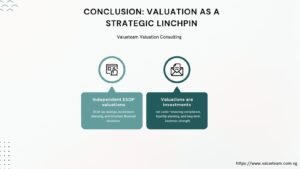
The success of an ESOP depends upon the valuation, and that’s a discipline that benefits all involved in the plan, from a new employee in the warehouse to a plan owner who is looking for exit. An understanding of how Fair ESOP Valuation can keep retirement accounts and company compliance safe and secure positions the professional to support, guide, or function in an employee-owned company. The next obvious step is to view valuation as an ongoing management process, rather than an annual event, and communicate the results effectively to staff, while making sure that every assumption made is documented and is open to scrutiny. When applied regularly, it is the means by which ESOP Valuation is benefiting employees and employers in a permanent fashion: ESOP Value Creation and ESOP Value for Employees becomes a reality, not a theoretical possibility that exists on paper.