How Employee Stock Ownership Plans Work in 2026?
Understanding Employee Stock Ownership Plans Work: What Exactly Is an ESOP in 2026?
The Employee Stock Ownership Plan (ESOP) used to be a fringe benefit for a select few. But it has now become a standard way of retaining employees by startups, medium-sized businesses and multi-national companies. Whether you’re negotiating a job offer, looking at existing equity that has been awarded to you, or simply making long-term financial planning decisions based on a benefit that is poorly explained at the time of hire, it’s important to understand how an Employee Stock Ownership Plan works in 2026. ESOPs place a direct stake in the companies that they help create, making the employee’s personal financial interests in the business’s performance – and in some instances, decisions regarding their stay, departure or exercise – directly tied to their own performance. However, the mechanics—the vesting periods, valuation approaches, windows of exercise and tax accounting—can be quite baffling, particularly for professionals early in their careers who may be considering their first equity offering without a comparison point. This article guides you through step-by-step, provides real world examples from various markets, breaks down some of the common pitfalls and takeaways, and shares some of the useful tools such as an ESOP calculator guide and an Employee stock tax benefits tool to help you understand your own plan and take steps accordingly with confidence.
How Employee Stock Ownership Plans Work: What Exactly Is an ESOP in 2026?
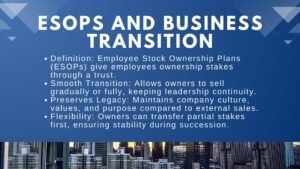
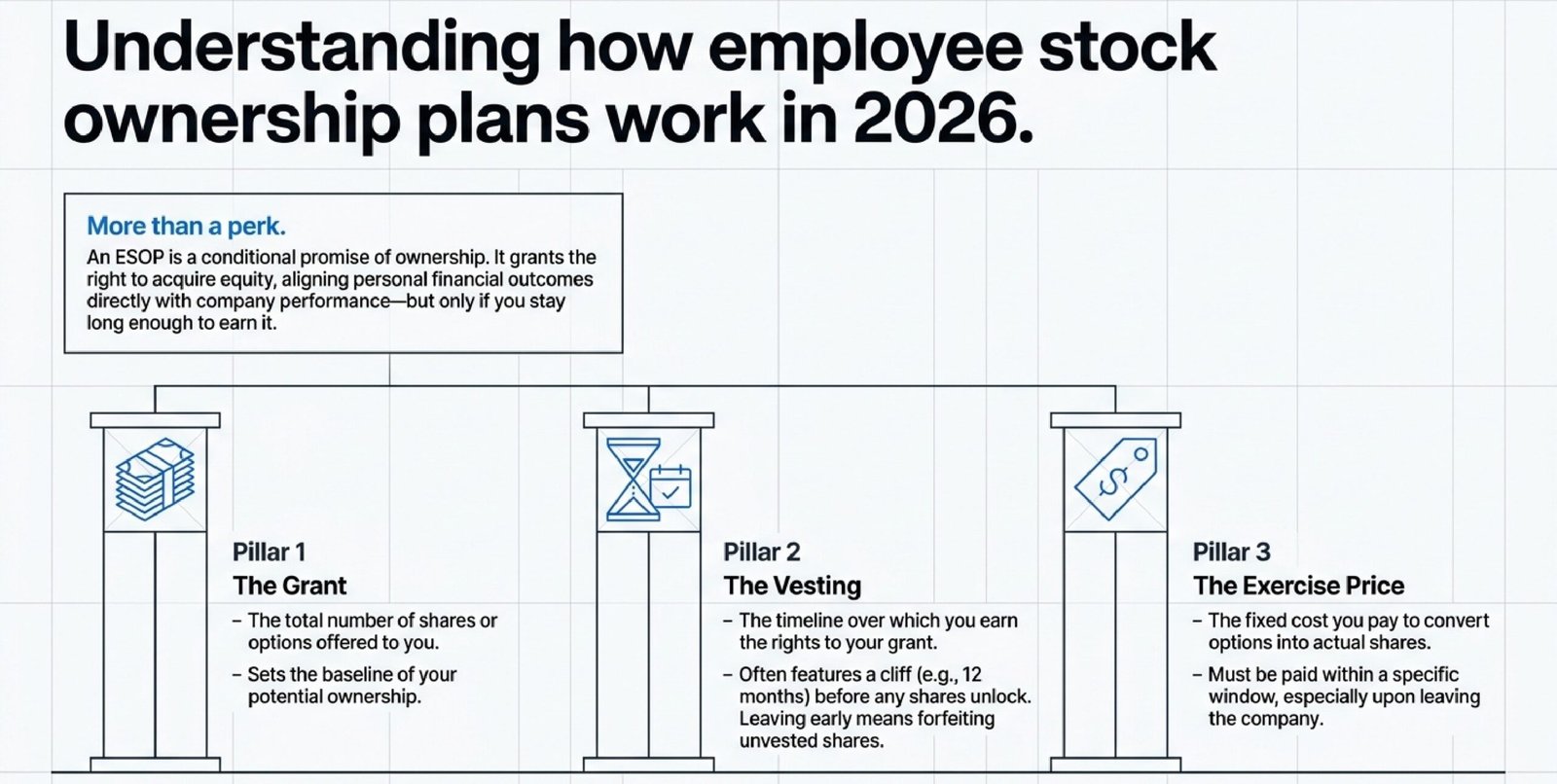
An ESOP is in essence a benefit plan in which a company gives its employees the opportunity to buy into the company, either outright or with the option to purchase, at a fixed price. ESOPs are now being offered by manufacturing companies, healthcare companies, logistics companies and professional services companies as competition for skilled labor grows in almost every industry who have come to be associated with young tech startups trying to preserve cash flow while finding the limited technical workforce available to them. The trend has continued to grow in 2026 with greater clarity on the reporting and taxation aspects, with regulators in Southeast Asia providing greater guidance and clarity for companies of all size to develop plans. The first step in comprehending the workings of an employee stock ownership plan is to realize that an ESOP is not a bonus; it’s a stipulated promise of ownership that doesn’t become valuable unless the business delivers, the employee remains long enough to reap the benefits, and a future event finally transforms the paper into cash.
All ESOP programs have a few basic elements: Grant (the number of shares/options you receive); Vesting schedule (the timing of when you will be eligible to receive the shares/options); Exercise price (the amount you will pay in exchange for the shares/options); and Exercise window (how much time you will have after vesting to actually exercise the options for shares). Some also have a cliff of twelve months or more before there are no shares awarded, and many have acceleration clauses that accelerate the vesting if the company is sold or an employee is terminated without cause. When combined, these elements create a lifecycle from the moment an offer letter is signed until the day shares are actually sold – be it in a company sale, IPO, or a secondary sale made prior to either of those events. Those who spend the time to chart this life cycle upfront – preferably before signing an offer letter – are far more likely to then be able to negotiate the better terms, ask questions more pointedly during the interview process, compare offers from other employers on a like-for-like basis, and avoid expensive surprises later in the life cycle.
How Employee Stock Ownership Plans Work: What Does the Five-Step Process Look Like?
While the actual experience that an employee has of an employee stock ownership plan may have multiple phases, the process can be simplified into five stages, starting from when an employee learns about the plan internally, through to when the employee’s stock actually becomes cash. Every step involves decisions, deadlines and paperwork, and any one of these missing can result in the loss of value that has taken many years to achieve. If you’re considering a job offer that includes equity and want to see where the company is in this series, you should reach out to the manager or HR to get a detailed explanation of where the company is at on this list, as an offer that’s just been approved for funding has very different risk levels than one that’s already gone through a round of funding or two.
Table 1: Five Steps in How Employee Stock Ownership Plans Work – How Employee Stock Ownership Plans Work in 2026?
| Step | What Happens | Why It Matters |
| 1. Plan Design & Approval | The company’s board approves a pool of shares set aside for employees. | Determines total available equity and dilution impact. |
| 2. Grant & Offer Letter | An individual employee receives a formal grant with vesting terms. | Sets the baseline for how much equity you can eventually own. |
| 3. Vesting Period | Ownership rights accrue gradually, often over four years with a one-year cliff. | Rewards tenure; leaving early usually forfeits unvested shares. |
| 4. Exercise | The employee pays the exercise price to convert options into shares. | Triggers potential tax liability and locks in ownership. |
| 5. Liquidity Event | Shares are sold via acquisition, IPO, or secondary sale. | The point at which equity finally becomes real cash. |
In real terms, the most important conflicts occur between step three and step five. Vesting cliffs are often a point of confusion for employees, who end up leaving just before a big percentage of their stock becomes vested, or employees exercise options and don’t know what tax bill they are facing because the company has fallen on hard times. Another constant issue is illiquidity – shares in a private company can appear to be a great deal on paper for a very long time before a qualifying event that will make them tradeable; and during that period, the valuations of an employee’s net worth can be theoretical rather than real. Those companies that simplify their communications at every stage – whether during orientation, in annual equity statements, through easy-to-find HR support or with clear explainers instead of lengthy legalese – experience much fewer disputes and significantly better employee satisfaction with their equity initiatives. It is also important to consider these five steps not as one-off items, but as a cycle: Companies will give additional “refresh” grants after a year or two of good performance, each with its own vesting schedule, so as the employees’ tenure increases they can end up having to manage two or three schedules at the same time, and this is why periodic reviews are increasingly important over time.
How Employee Stock Ownership Plans Work: What Do Real-World Examples Look Like?
Imagine that Nova Analytics, a middle-sized financial tech firm in Jakarta, hired the data analyst as one of its first 50 employees. She received options to buy a certain percentage of the company that vested in 4 years with a typical cliff of 1 year. After two and a half years she took up a new job elsewhere. She had crossed the cliff, and about sixty percent of her original grant had now vested; she was offered a window of ninety days for the options to expire. In that time frame, she consulted with a financial advisor, used a basic spreadsheet model to do some calculations, and considered the cost of the exercise in the context of the company’s recent funding round and revenue growth. She exercised a part of her vested options, paid out the exercise price, and held the rest of the options for the short time that she had between the exercise date and the expiration date. Two years later Nova Analytics was acquired and her shares that vested turned into a real payoff, although not as high as it would have been if she had waited until they vested and exercised all the shares she could before she left.
At Meridian Robotics, a medium-sized robotics company in Vietnam, a different strategy was implemented, a wide-ranging ESOP, not just for senior employees and engineers. Size of allocation was correlated with how long people were at the company and their role within it, and the company also conducted annual town halls to explain how the plan worked in simple terms and offered a straightforward calculator that let employees approximate how much they would get back at the end of the year under a variety of circumstances before deciding on anything. HR also sent out a brief annual letter detailing the vested percentage of each employee, the estimated value at that time and the vesting dates in the future, which left few employees surprised by a cliff or an expiring exercise window. Three years later, when Meridian went public, there were definite rewards for warehouse supervisors and junior engineers alike – some significant enough to cover an initial down payment on a home or even to pay off debt. The upshot of both examples: workers who had some idea of their vesting schedules, did their best to imagine possible consequences early on, and sought advice before making big decisions garnered significantly more value from their equity than those who left their stock until it was too late – after a decision point forced them to make a choice.
How Employee Stock Ownership Plans Work: What Are the Key Benefits and Challenges?
ESOPs are well known. They provide a low-cost method for engaging talent without having to pay them a lot more cash, and they provide the employees with real ownership in the results that they play a role in generating, which is likely to create more loyal employees and more ownership-oriented practices in the workplace, ranging from how expenses are administered to how customer issues are prioritized. For those looking to find a job, a well-designed strategy can be a significant advantage in the longer term, especially when you’re at a company that has good growth prospects and has a realistic possibility of a liquidity event. Knowledge of how ESOP works also enables professionals to have a better negotiating position as they can ask informed questions on the grant size, vesting period, refresh grant and valuation, instead of taking the number mentioned in an offer letter without context.
The difficulties are just as tangible, and especially for junior professionals. Illiquidity occurs when workers have an equity value of a large amount on their books that they simply cannot convert into cash for years, or even a whole economic cycle. Bigger companies don’t always mean bigger paydays for individual employees, and early hires or senior leaders will generally have larger grants at a lower exercise price than later hires who come in after the company has already diluted. Tax treatment can be quite different from place to place and from being exercised before or after a liquidity event, so there is a real risk of receiving a tax bill well before any cash gets received. All of this is further complicated by the fact that shares of private companies are not generally traded on a real-time basis and are therefore not necessarily valued in the open market, forcing employees to rely on estimates by other or independent parties. A mid-career professional’s most common and avoidable mistake is to rely too heavily on one stock for compensation – as heavy as the stock looks from the inside, it might never materialize as long as they wait to spend it.
How Employee Stock Ownership Plans Work: How Do You Calculate and Evaluate Your ESOP?
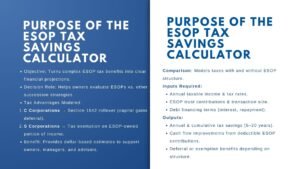
A good ESOP calculator guide can be very useful and not just optional this is where. A good calculator will allow you to model your grant based on various exit valuations, factor in dilution over future funding rounds, and determine how much equity is vested at any point in time — not just make a best guess. In addition, an employee stock tax benefits tool is provided to make it easy to distinguish between the two separate tax events that most plans entail: the tax liability at the time of exercise (which is based on the difference between the fair market value and the exercise price); and the tax liability at the time of eventual sale (which may be subject to more favorable long-term capital gains tax rates if the shares are sold after a minimum holding period prescribed in local tax law). These figures ought to be run BEFORE a decision is made, and not after, and takes just a few minutes when the numbers are available once the relevant figures are available.
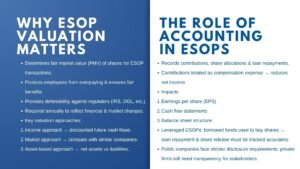
Valuation practices can also vary significantly by market, and it can be useful to have a reference point to work from, such as the ESOP valuation Singapore methodology, which are provided by regulators, and which offer a relatively clear guideline on qualified equity-based remuneration schemes and the independent valuation requirements for private companies so that employers and employees have a shared reference point. In less standardized markets, the valuation may be less transparent, and should be explicitly confirmed by the employee before making a decision to exercise the option, not taken for granted, based on the last year of valuation. It also allows for a separation of modeling from decision making; a company may have a calculator guide that shows a variety of outcomes, spanning from one that does not experience a liquidation event, to one that grows well beyond expectation, but it can’t tell you which is most likely; the numbers from an ESOP calculator guide combined with independent research into the industry a company is in, the trend of funding in that industry and the company can give a much more realistic picture than can a calculator alone. As a general rule, re-value items at least once per year, stress test your calculations for both optimistic and pessimistic exit scenarios using a calculator, and assume any tax calculation to be only a best guess until verified by a qualified advisor who will be familiar with the specifics of your jurisdiction and how equity income is treated there.
Table 2: Employee Stock Tax Benefits Tool: Typical Triggers by Event – How Employee Stock Ownership Plans Work in 2026?
| Event | Typical Tax Trigger | Employee Action |
| Grant | Usually no tax owed at this stage. | Record grant date and terms. |
| Vesting | Generally not taxed unless shares vest directly (RSUs). | Track vested percentage over time. |
| Exercise | Tax may apply on the spread between fair value and exercise price. | Model cost using a calculator before acting. |
| Sale | Capital gains tax typically applies, often at a reduced rate if held long enough. | Confirm holding period with a tax advisor. |
Conclusion: How Employee Stock Ownership Plans Work in 2026?
More employers are turning to ESOP in more industries in 2026 and they are still one of the most powerful—and misunderstood—compensation tools out there. The simple answer for those in a junior to mid-level position is to read the offer letter carefully, and ask questions about grant size, vesting cliffs and refresh policy before accepting a job, get at least one updated valuation report annually, and use an ESOP calculator guide along with an ESOP tax benefits calculator before exercising or selling shares during a time of deadline pressure. Don’t let equity end up as a disproportionate amount of your net worth, be sure to have copies of all grant documents you are given and seek advice from a tax advisor for every liquidity transaction, don’t attempt to do it yourself. When used with intention, equity compensation can help move the needle on long-term objectives and provide compensation for years of effort; when used unintentionally, it can create confusion, missed deadlines and lost value.